BIOGRAPHY
From Florence, he arrived in Rome in 2023, where he currently resides.
Born in Lecce in 1957, he became interested in visual art from a very young age, particularly in painting, and worked as a graphic designer, illustrator, and designer during his university years in Florence. Graduating with top honors in architecture (1983) with a thesis on contemporary art and aesthetics viewed as a process of reading and transforming physical space, he created several architectural works and taught artistic subjects for a few years.
In 1984/85, he founded the Italian Academy of Art, Fashion, and Design in Florence, a university and artistic training institution that he directed until 2020.
His relationship with youth creativity, the creation of new programs and methods aimed at developing creativity in various artistic sectors, has always been a constant commitment for Giubba. With his Academy, he successfully transported the idea of the Renaissance “art workshop” into a contemporary international, multidisciplinary, multiethnic, and multicultural context, attracting thousands of students from around the world and involving hundreds of teachers.
The disciplinary and interdisciplinary experiences encompassed visual arts, fashion, design, and photography, responding to the needs that emerged from the 1980s onwards for stylistic innovation and formal diversity that had to coexist with technological research, marketing, the advent of digital technologies, and, importantly, the development of a new ecological consciousness.
From Florence, Vincenzo Giubba arrived in Rome in 2023, where he currently resides.
Born in Lecce in 1957, he became interested in visual art from a very young age, particularly in painting, and worked as a graphic designer, illustrator, and designer during his university years in Florence. Graduating with top honors in architecture (1983) with a thesis on contemporary art and aesthetics viewed as a process of reading and transforming physical space, he created several architectural works and taught artistic subjects for a few years.
In 1984/85, he founded the Italian Academy of Art, Fashion, and Design in Florence, a university and artistic training institution that he directed until 2020.
His relationship with youth creativity, the creation of new programs and methods aimed at developing creativity in various artistic sectors, has always been a constant commitment for Giubba. With his Academy, he successfully transported the idea of the Renaissance “art workshop” into a contemporary international, multidisciplinary, multiethnic, and multicultural context, attracting thousands of students from around the world and involving hundreds of teachers.
The disciplinary and interdisciplinary experiences encompassed visual arts, fashion, design, and photography, responding to the needs that emerged from the 1980s onwards for stylistic innovation and formal diversity that had to coexist with technological research, marketing, the advent of digital technologies, and, importantly, the development of a new ecological consciousness.
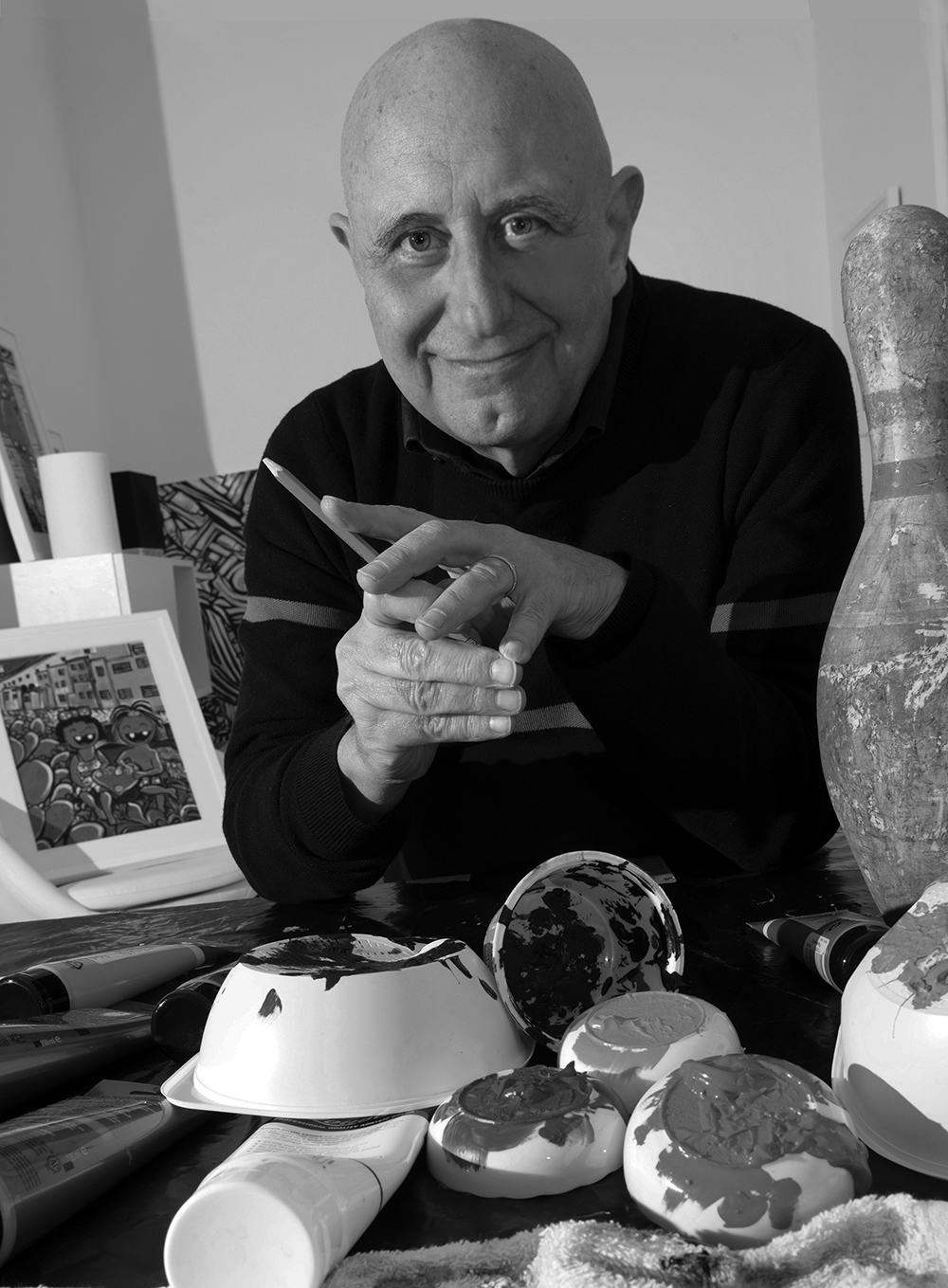
Building on these foundations, from the 1990s onwards, Vincenzo Giubba took the institute to an international level, opening branches and promoting new programs abroad (first in Berlin, then in Bangkok, Skopje, and in the USA, Providence and Philadelphia…) along with a location in Rome that complements the one in Florence. His academic activity also provided him with the opportunity to connect with artists, designers, and personalities from the worlds of art, fashion, cinema, and culture. Designers of the caliber of Vivienne Westwood, Carla Fendi, John Richmond, Ermanno Scervino, Elio Fiorucci, Roberto Capucci, and film personalities such as directors Franco Zeffirelli and James Ivory, Oscar-winning set designer Gianni Quaranta, artists like Michelangelo Pistoletto, Silvano Campeggi, photographer Oliviero Toscani, architects-designers Andrea Branzi and Alessandro Mendini, among many others, would gather at the Academy as guests of events conceived by Vincenzo Giubba to provide opportunities for young people to connect with the masters. Together with Gianni Quaranta, he developed an academic program in Rome for new set designers and costume designers.
During his artistic and cultural events, which highlight the possibilities and creative contributions of new generations, he comes into contact with internationally renowned art critics (including Philippe Daverio, Vittorio Sgarbi, and Francesco Bonami).
In 2016, he was awarded the international prize “Le Muse” for his support of youth creativity and cultural and artistic promotion (Palazzo Vecchio, Salone dei Cinquecento, Florence – June 18, 2016).
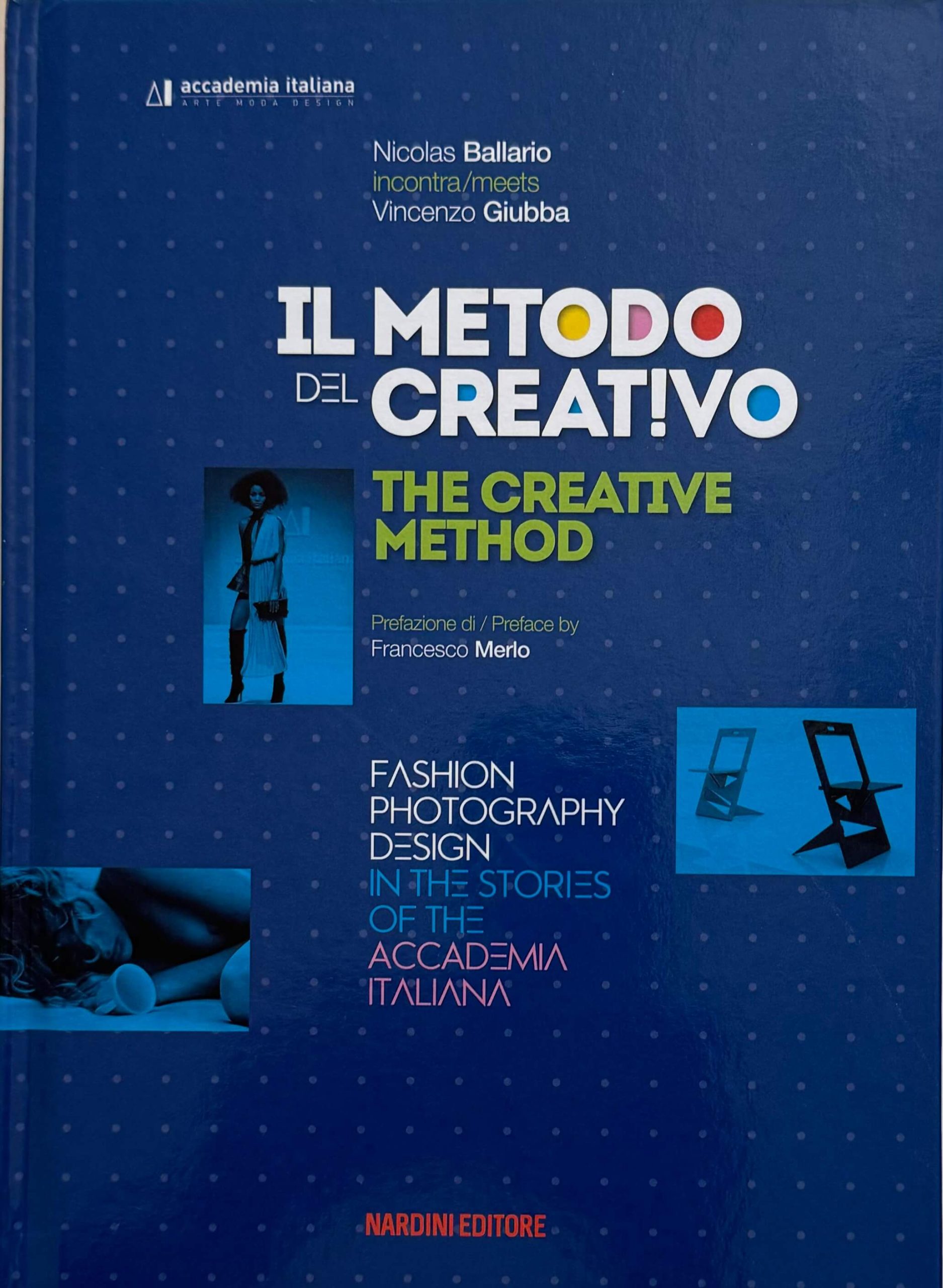
These experiences and many others will be collected and illustrated in a book-interview, where Vincenzo Giubba recounts over thirty years of activity (“The Creative Method” – Nicolas Ballario meets Vincenzo Giubba, Preface by Francesco Merlo, Nardini Editore, 2018).
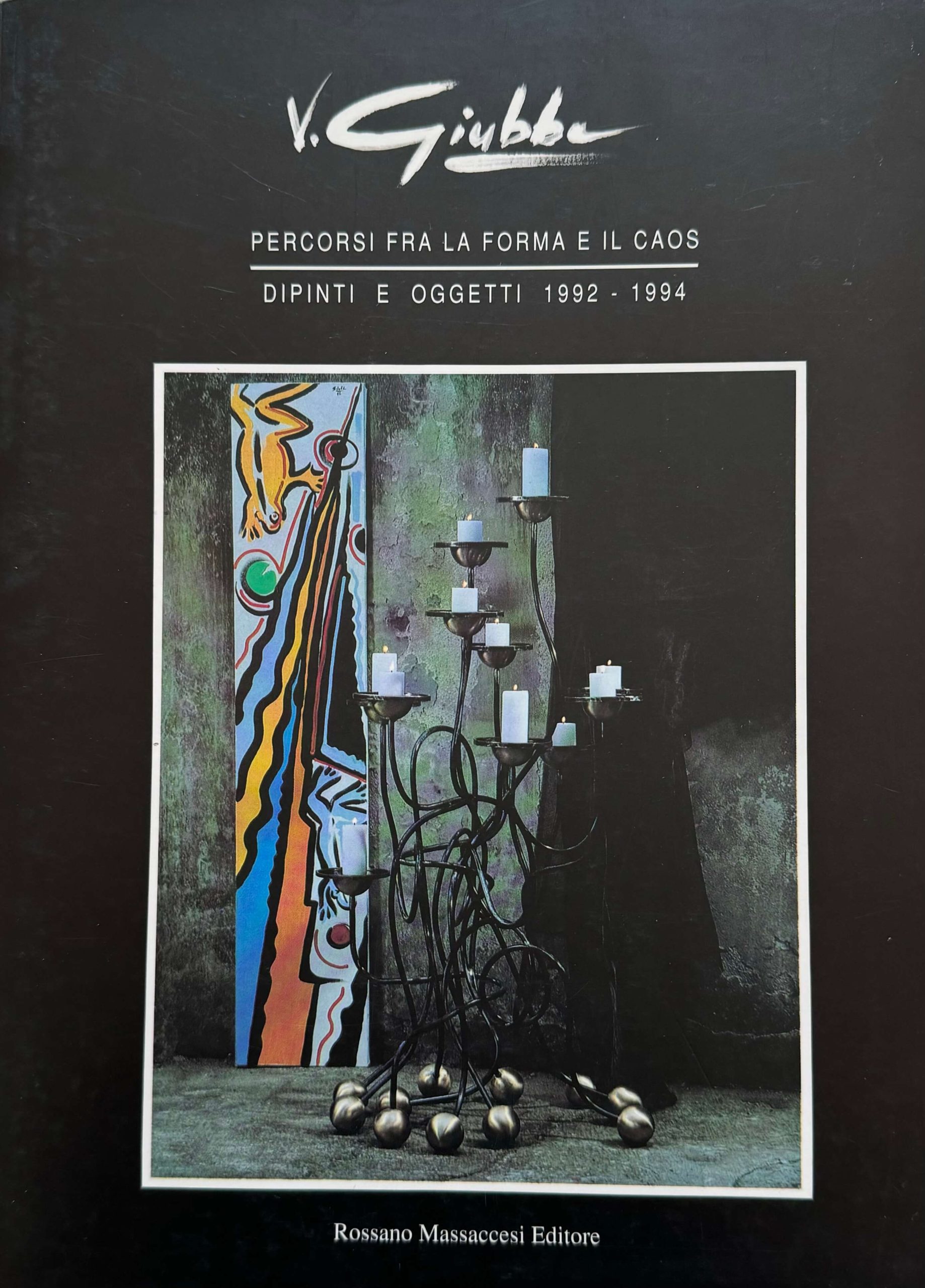
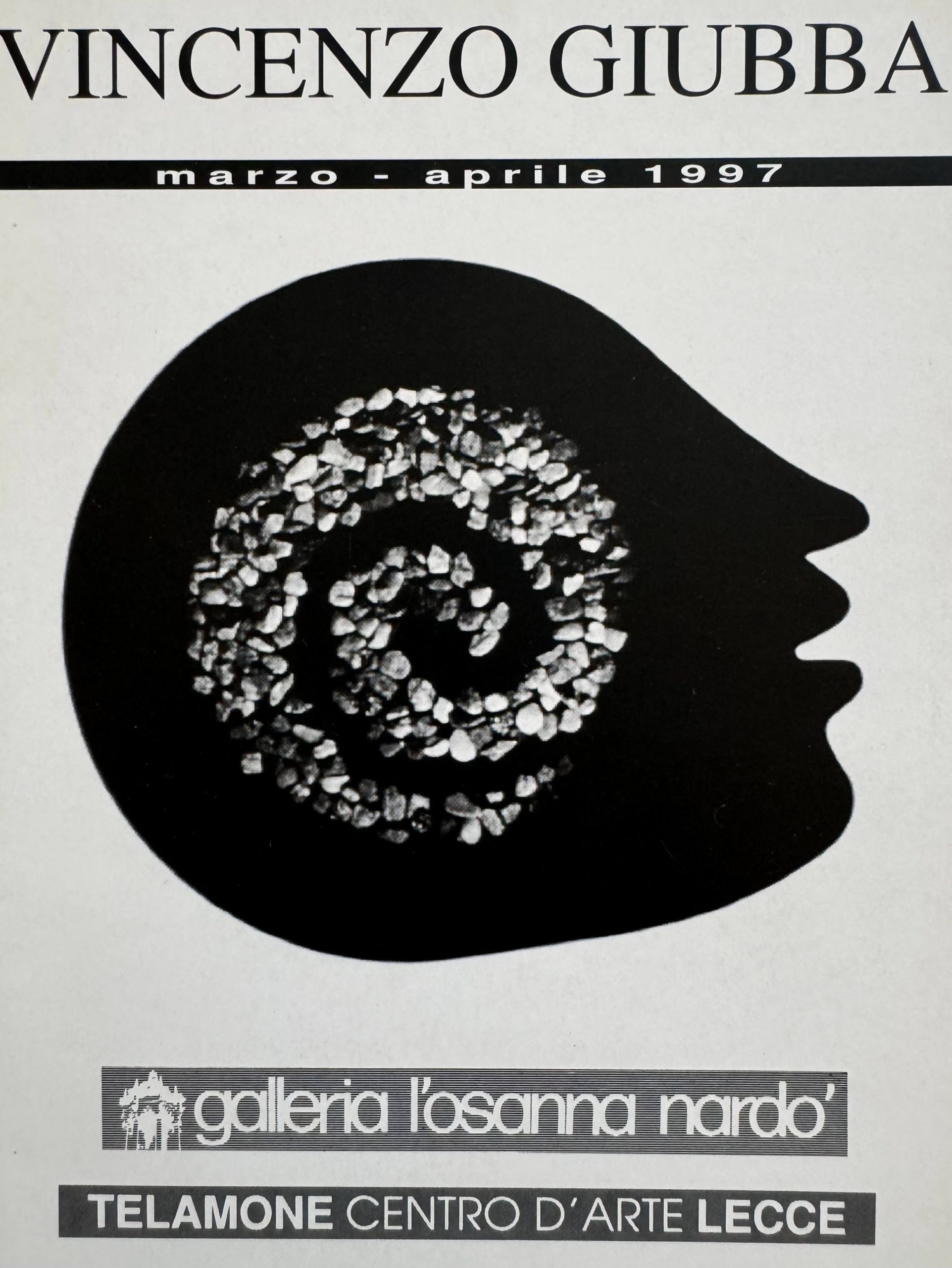
The 1990s, however, also marked a moment for Vincenzo Giubba to exhibit his creations—colorful paintings and monochromatic sculptures—in solo exhibitions, both in Italy and abroad, in public spaces as well as private galleries, from Milan (1995 at Galleria Fabbrica Eos – Contemporary Art) to Florence (Presidential Villa, 1994, sponsored by the Cassa di Risparmio di San Miniato, the Tuscany Region, the Province, and the City of Florence), from Padua to Modena (Forum Artis Museum of Montese, permanent collection), from Bologna to Bari and Lecce (Telamone Centro d’Arte, Lecce, and Galleria L’Osanna, Nardò – 1997), to Lugano (Galleria Folini & De Giorgi, 1995). His personal artistic research during those years, which encompassed experiences developed in different yet related disciplinary fields, aimed to “overcome the 1980s, abandoning the hedonism of the past, reaching for a future that reveals immaterial values. A future without certain answers, but only incessant questions.” (Excerpt from: “Vincenzo Giubba – Paths between form and chaos – Paintings and objects 1992-1994” Rossano Massaccesi Editore, introduction).
His artistic activity is eclectic and multidisciplinary, spanning from canvas to three-dimensional space, from “pure” art to the application of his formal research in design (Abitare il Tempo – Projects and Territories 1994, Genius Loci 1995, Exhibitions of experimentation and research 1998, Verona).
Vincenzo Giubba’s work has always proposed an art that is difficult to classify, “…whose forms hint at a breaking of geometric rules that creates a strong tension toward boundaries, toward the frontier, highlighting the limits of traditional codes.” (E. Mucci, from “Paths between form and chaos”). An art aimed at reinterpreting signals from contemporaneity: “…The artist’s palette, although infused with the same anxiety as the sculpture of seizing hidden figures, epochal signals, and linguistic and technological metaphors of our time, is animated by an insurmountable chromatic force (…). The symbols of forgotten realities, the underground graffiti of refuge places, the metallic and jarring notes of the wild metamorphosis of our era impose themselves on the canvas precisely because they are real. The artist has once again appropriated the existing, the phenomenon, (…).” (M. Paraventi, from: Paths between form and chaos”).
These are the years in which Vincenzo Giubba positions himself as an observer, a witness of metropolitan reality: “A detachment from reality that does not signify disinterest or worse, an alienating escape. His paintings are conducted along iconic figuration to more deeply engrave themes and concepts. Intellectual painting, his? Certainly courageous painting that gives nothing to gratification (…).” (G. Thorel, introduction to the solo exhibition “Paths between the real and the virtual, Florence, May 1994).
These are the premises and roots to which Vincenzo Giubba refers and with which he must confront himself when he decides that, having set aside academic commitments, it is time to take up brushes and colors again.
During the solo exhibition titled “Shared Worlds” held in 2023 in Florence (Florence Art Deposit Gallery), the artist himself declared: “For me, it emphasizes this moment, but it is also a point, an exclamation point directed at the past, a question mark directed at the future, and it is also an empty space, like a deep conscious breath, directed at the present.” (from the postcard produced by the gallery).
The artist reclaims his own past, fragmenting and modifying it, thus proposing these fragments in a new light.
What he does is an operation of dismantling some old works: armed with a cutter, he “vivisects” his old pieces, pulling out characters that belonged to another pictorial context. The characters thus acquire their own autonomy, their own life, accentuated by a new light: it is the brushstrokes of white that invigorate the works, which thus become “new works” in their own right.
Vincenzo Giubba states: “It was like retracing an old dusty road after taking a shower and putting on a new outfit. I reread the past, destroying some things and saving others.”
For about two years, the artist has moved to Rome, where he has created new works. At first glance, looking at his paintings, one might think we are facing “spontaneous” painting; the gestural and rapid brushstrokes might deceive us: in reality, these are thoughtful works, rigorous in composition, albeit with a natural predisposition for improvisation, as if it were a jazz composition. In the works produced in Rome, in his studio in Trastevere where he currently works, the artist introduces an element of irony, a laughter that he considers a form of “meditation,” an attitude of not taking himself too seriously.
Giubba’s latest works have been defined in many ways, as certain elements can be identified that might lead us to think of specific styles (pop art, expressionism, graffiti art, some surrealist references, etc.), but this would be misleading and would distance us from the final essence of the artistic production. Irony and dramatic effect coexist in the work. The coexistence of subjects and sometimes grotesque situations, seemingly presented without logical connections, is the result of an elaboration by the artist suggesting a melting pot of diverse realities, using strong and pure colors that evoke colored LEDs, advertising, comics, and cartoons. Objects, characters, and colors float on the canvas, where nothing is static, where everything is in continuous transformation, everything is in balance, and the sense of impermanence translates into an invitation to search for an escape route. The human drama, seen through the artist’s eyes, also becomes irony and play. It is the game that the artist wants to engage the viewer in, the existing that he has appropriated, the phenomenon he has shaped, the dream and memory to which he has made modifications; it is the elaboration of a set of information and messages that he leaves for others to decipher, an invitation to enter his world.
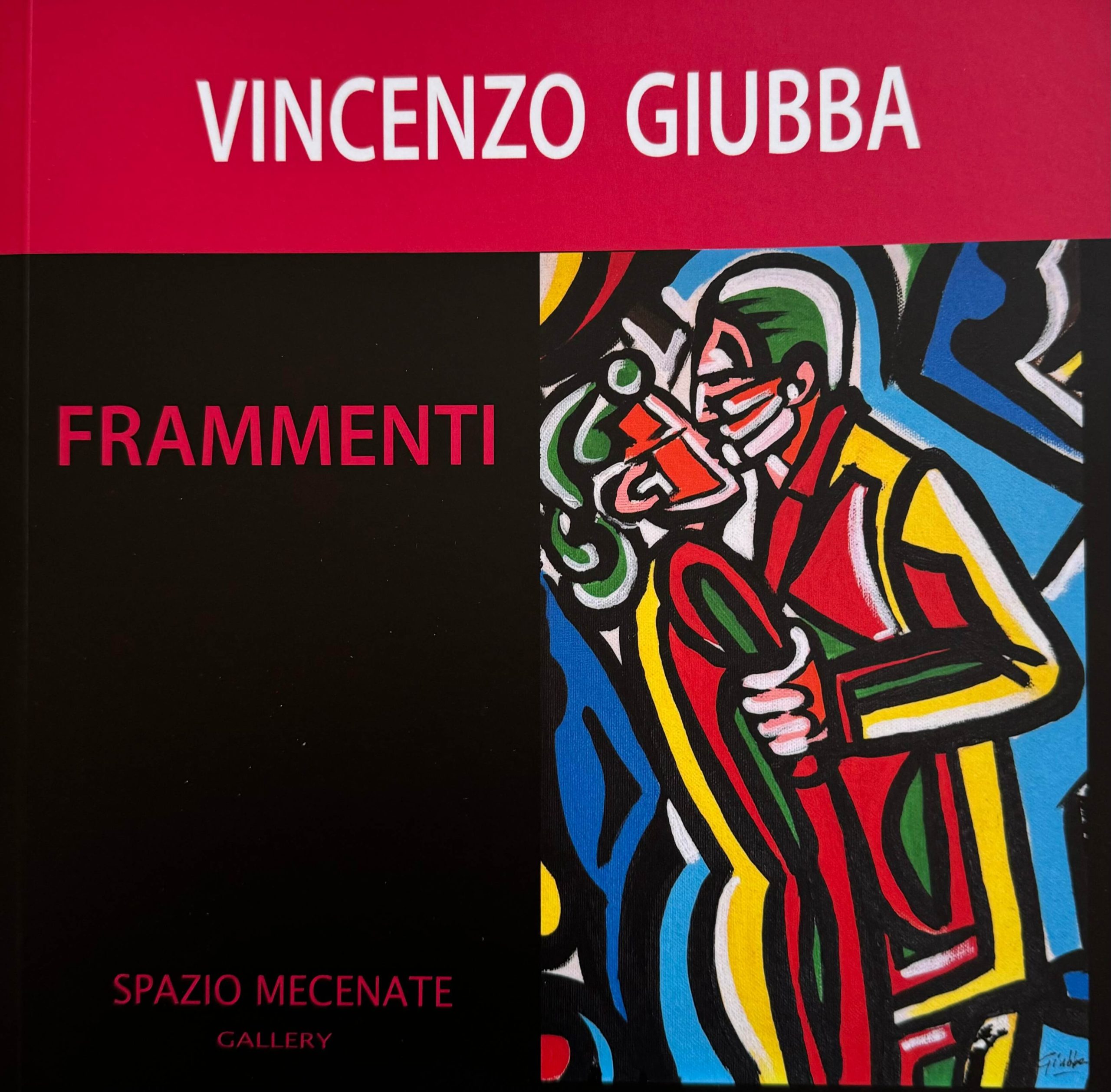
Thus, in a recent solo exhibition titled “Fragments” (Rome, April/May 2024), Giubba interprets the present “…and he does so while preserving the noble art of painting in an age permeated by the digital. Giubba can play, and from the alchemical Magician of the tarot, only by acting counter to the trend like the card of the “Fool,” can the path become positive.” (Carlotta Degli’Innocenti, from: “Fragments,” Frames of the past, icons of the present, 2024).
PUBLICATIONS
Vincenzo Giubba - Percorsi fra la forma e il caos - 1994, Rossano Massaccesi Ed.
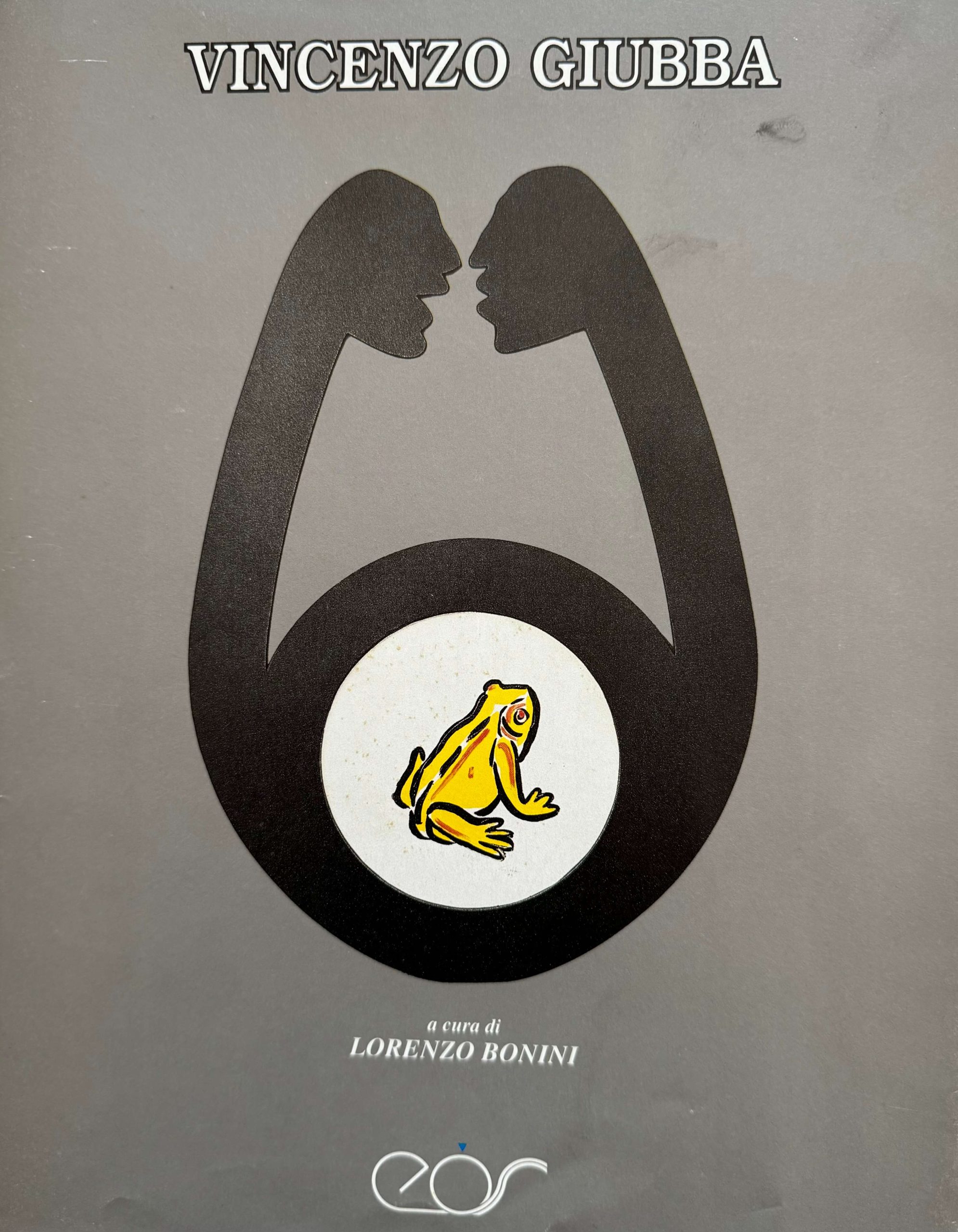
Vincenzo Giubba - a cura di Lorenzo Bonini - 1994, Eos ed.
Vincenzo Giubba (catalogo mostra) - Galleria L'Osanna Nardò, Telamone Centro d'Arte Lecce , 1997
Il metodo creativo - Nicolas Ballario incontra Vincenzo Giubba - Introduzione di Francesco Merlo - 2018 Nardini Editore
Vincenzo Giubba - Frammenti (catalogo mostra) - 2024, Spazio Mecenate Gallery
Vincenzo Giubba “ Percorsi tra la forma e il caos” (R. Massaccesi Ed. 1994)
Vincenzo Giubba “Catalogo mostra Marzo-Aprile 1997” (Galleria L’Osanna Nardò, Telamone Centro d’Arte Lecce)
“Il metodo creativo” (Nardini Editore, 2018)
“Frammenti” (Catalogo mostra, Roma 2024)
FEATURED ON
Corriere della Sera, La Repubblica, La Nazione, Il sole 24ore, Il Tirreno, Panorama, Toscana Qui, La Gazzetta del Mezzogiorno, Quotidiano, Gap Italia, Pensiero ed Arte, ContemporArt, Firenze Ieri Oggi Domani, La Gazzetta di Firenze, Firenze la Sera, La Città, Firenze Spettacolo, Art Agorà, Volksblatt, Der Tagespiegel, Berliner Morgenpost, Tip, The Sydney Morning Herald, Affari Italiani, Artribune, Exibart, Nove, Itinerari nell’arte (e molte altre testate giornalistiche) e in trasmissioni televisive e radiofoniche ( RAI 2, RAI 3, Canale 5, RAI radiotoscana, RIAS-Tv Berlin ed altre).
 English
  Italian